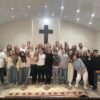
We are currently witnessing a miracle of church history in Libya. While the Christian Church flourished in North Africa in the first centuries after the life, death and resurrection of Jesus, it was beaten back in the seventh century. At that time, warring Muslim Arab tribes invaded North Africa and introduced Islam.
For many years, there were no native Christians in Libya, but today there is a quiet church growth. In total, there are just over 30,000 Christians in Libya, but the vast majority are Christian guest workers from countries such as Egypt, sub-Saharan Africa and the Philippines. The number of native Libyans who have become Christians is around 100. In the late 1990s, there were 5-10 known native Christians.
However, the new Christians face strong resistance from the authorities. Currently, 13 are in prison awaiting a court hearing on April 15, 2025. In addition, Dia Balao was sentenced to death on September 4, 2022.
Libyans who convert from Islam to the Christian faith also risk facing strong resistance from their families. Among the few Christian converts, there are many examples of their families feeling ashamed that a family member chose to become a Christian. Several have even been reported to the authorities by their own families because of their choice.
And the authorities are far from secular in Libya. In the civil war-torn country, Salafist Islamist groups have gained great influence and in some cases carry out government functions and act as self-appointed moral police. This affects Christians, atheists, feminists and sexual minorities.
But the power of Islamists is creating a backlash, especially among young people. In 2019, the Arab Barometer poll showed that as many as 36 % of 18-29 year olds in Libya identify as non-religious. In a society where extremist Islamists are striving for more power, this development is remarkable.
There is an unprecedented opportunity to share the message of God's love in Jesus with seekers in Libya. And here, media plays a vital role. Seekers can secretly access websites and videos and write together with follow-up teams via social media.
Many thanks to the intercessors and donors of the Danish European Mission who, at a time like this when there is spiritual openness in Libya, are spreading the message of Jesus' love through social media and personal follow-up and faith formation. And also ensuring that financially distressed Christians receive job training to enable them to become self-sufficient.
While some believers are isolated, others can meet in small underground churches. The young church needs support so that the message of Jesus, who took the sin of the world and paved the way into God's love, can transform and set even more people free in Libya.