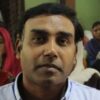
"In the Kandhamal case, both the national and state governments have failed to apply their constitutional mandate to protect the fundamental rights of citizens," said Raphael Cheenath, Archbishop Emeritus of Cuttack-Bhubaneshwar, as he told Asianews about a report that highlights the gross inadequacy of state and national compensation awarded to victims of the 2008 violence.
The report was released on Friday, May 31st under the title "Unjust compensation: Assessing damage and loss of private property during the anti-Christian violence in Kandhamal, India". It was written by the Center for Sustainable Use of Natural Resources (CSNR, Bhubaneshwar) and the Home and Land Rights Network (HLRN, New Delhi). The two NGOs presented their work in collaboration with the Church and the Red Cross.
According to their research, the Orissa government only paid compensation in cases of death and damaged or destroyed houses. All other forms of property - land, personal belongings, furniture, documents, farm equipment, tools and food stocks - were excluded from the compensation amount. This, says the prelate, "has seriously harmed people who were almost totally ruined".
As the study indicates, the problem is that there is no policy in the country, either at the state or national level, on how to deal with such losses.
The issue of compensation also includes destroyed or damaged church buildings. "The government says it cannot provide grants for the reconstruction of damaged churches and religious facilities because India is a secular country," says Bishop Cheenath.
The Bishop has earlier filed a petition in the Supreme Court asking for 300 million rupees (approximately $2.9 million) to repair damage to church buildings.
Although the court ruled in their favor, the government has only awarded them a fraction of the amount originally requested.
Secretary General Henrik Ertner Rasmussen says: "The Danish European Mission helped some of the hardest hit citizens in Kandhamal. People who had lost everything during the unrest were helped to establish their own small businesses, such as a market stall selling home-grown vegetables or a small kiosk selling small necessities. Help was also given to rebuild destroyed village churches. What help we could give was provided from funds raised, and it was far from enough to cover the enormous need that arose when nearly 50,000 people who had been displaced and lost everything began to return to rebuild their destroyed lives and property. In some places, Christians could not even return at all unless they agreed to convert "back" to Hinduism. When I met Archbishop Cheenath, he seemed broken with grief at the atrocities that had befallen the Christians in Kandhamal and the neighboring district of Rayagada. But the grief was also due to the lack of unity that the Christians had shown in fighting over scarce resources and reparations. Pray for a solution to be found to the problems of inadequate compensation, both for private property and for churches.