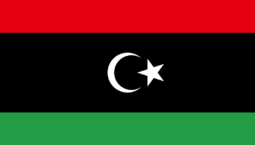
Libya

Information about Libya
Main religion: Islam
Governance: Presidential
Number of Christians in total: Estimated 30,000 (mainly guest workers from Egypt, Philippines and Africa)
Number of convert Christians: At least 70 known native convert Christians with Arab and Amazigh backgrounds
Islamization nearly wiped out the church in Libya
The situation of Christians in Libya can be summarized as follows:
-
The threat of persecution: Militant Salafist groups have partly filled the power vacuum that arose during the civil war in the wake of the dictator Gaddafi's fall in 2011. Christians and other minorities risk imprisonment and ostracism from their own families.
-
Searching population as a starting point: Although it is associated with mortal danger, opportunities arise to share the faith because many, especially young Libyans, are rebelling against Islam and searching for alternatives.
It's not that Libya hasn't played an important role in church history. It was Simon, from Cyrene in present-day Libya, who helped Jesus carry his cross to Calvary. When the Holy Spirit was poured out on the day of Pentecost, people from present-day Libya were present.
Several theologians who have had a decisive impact on the development of the theology of the Christian Church are from North Africa, such as Tertullian, Origen, Cyprian and Augustine. During this period, the church flourished in Libya and neighboring countries.
In the 7th century, Arab tribes invaded North Africa and defeated the indigenous peoples of North Africa, the Berbers, or more properly the Amazigh, as they prefer to be called. With the Arab invasion came the Islamization of the region, and for centuries the church was almost non-existent.
In 1969, Muammar Gadaffi came to power in Libya in a coup. Only Arabic was allowed, and the language of the indigenous peoples, Amazigh, was made illegal. Parents were not even allowed to name their children in Amazigh. The church consisted mainly of Christian guest workers, including people from Egypt, while the number of Christian converts, both Arab and Amazigh, was very limited. In the 1980s, there were only five known Christian converts.
In 2011, Muammar Gaddafi was overthrown as a result of uprisings in the wake of the Arab Spring. Several Western countries backed the resistance movements militarily. A brutal dictator may have been removed, but since 2011 the country has been characterized by instability, with the Tripoli government in the west of the country vying for power with the Tobruk government in the east.
I In this tense situation, with a lack of legitimate authorities, a power vacuum appears, where extremist, militant Salafist movements can play a major role. In both the eastern and western parts of the country, police and intelligence tasks are even partially delegated to such groups.
There are also examples of Islamists acting as moral police by demanding gender segregation in public gatherings, banning the sale of certain books and requiring women to dress Islamically. Not only Christians, but also atheists, feminists and humanists risk persecution.
Gods work in this particular situation
More and more Libyans from Muslim backgrounds want to hear about Jesus. The new Christians must meet in underground churches. This is what the partners of Dansk Europamission testify to. Even though Christians risk imprisonment, being cast out by their families, and, in the worst case, martyrdom, Muslims are seeking Jesus during this time. Jesus’ love, his person, life, teachings, and message of forgiveness and love for one’s enemies stand in contrast to the legalistic religion of Islam, against which a large proportion of young people, in particular, are rebelling. The Arab Barometer survey showed in 2019 that as many as 35.5 % of 18–29-year-olds in Libya identify themselves as non-religious.
What does the Danish European Mission do
- Danish European Mission's intercessors and donors support that Christians converts can be trained in the Christian faith, and that Christians converts under pressure can receive pastoral care and counseling in their specific situation.
- Danish European Mission supports the translation of the Bible into a minority language.
- The Danish European Mission has tried through diplomatic channels to contribute to the release of a Christian prisoner of conscience from prison but has not yet succeeded.