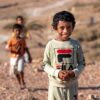
Christians in India and Indonesia are not immediately thinking about leaving their own countries, but more about where in their countries they can find refuge from persecution by Hindu and Islamic extremists respectively. Like the Jews, Christians have been displaced and chased from country to country many times throughout history.
It is tragic in human terms, but God's own people, Israel, experienced two crucial periods of exile, the first in Egypt, originally a refuge from a famine, and the second in Babylon, where they experienced their exile as God's judgment on the people's sins. Both periods were a time of preparation, when God planned a large-scale liberation operation that would lead the people to praise and worship God as the living God, the God of great wonders, the God who cares for them, the God who intervenes in human history and shows his abundant grace and mercy toward them.
In the New Testament, believers are reminded to consider themselves "strangers and foreigners" - and yet not. In 1 Peter's Letter ch. 2, v. 11, we read: "Beloved, I exhort you, as aliens and strangers, to keep yourselves from the lusts of the flesh, which wage war against the soul." In Paul's Letter to the Ephesians chapter 2, v. 19, we read: "So then you are no longer strangers and foreigners. You are fellow citizens with the saints and belong to the household of God." Peter is apparently calling believers to consider themselves a people who have their citizenship in heaven, as Paul affirms in Philippians chapter 3, v. 20, while Paul says that believers are no longer strangers and foreigners. When he says "no longer", it means that in the past they were strangers and foreigners, but they were in relation to the Kingdom of God. They were Gentiles, but now they are part of God's people, which consists of both Gentiles and Jews.
Our relationship with the world is twofold: We are i world, but we are called not to be of The world. It is good to have a home on earth, but as Christians we should not take it for granted that we will always have it, and we must, like the people of Israel just before the exodus from Egypt, be prepared to leave for the unknown, which is no more unknown than we know that God has prepared for us there a far greater wealth and blessing than we have been able to imagine from our limited abilities. Let us then face Easter as people who, together with our suffering brothers and sisters on the run in Iraq, India and Indonesia, are ready for a breakthrough, a breakthrough that leads to a breakthrough for the Kingdom of God.