Straight 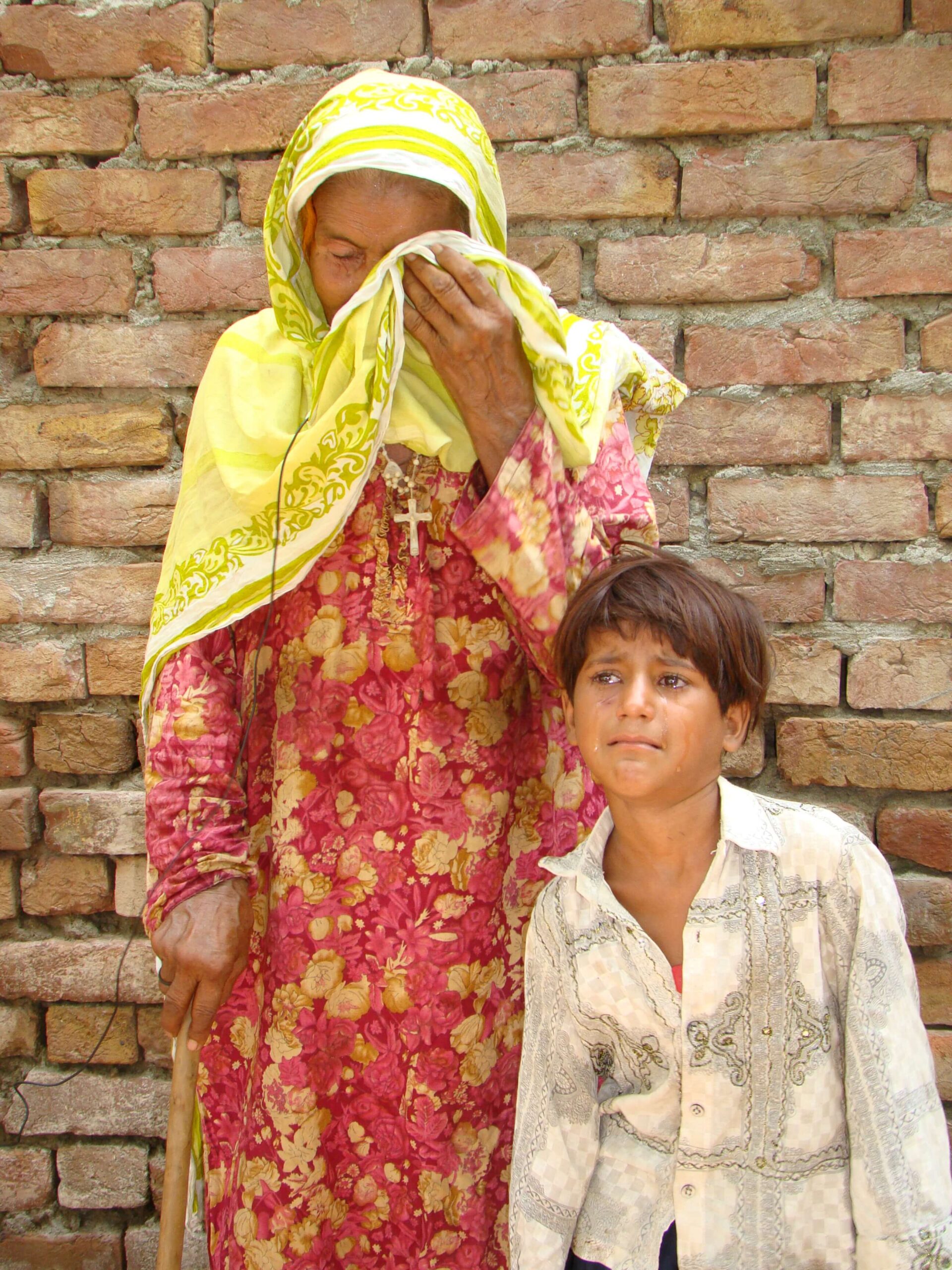
- Right now, the situation has improved in the northern part of Pakistan, while in the southern part of the country in West Punjab and Sindh province, the situation is unchanged. "There are many we haven't reached yet and millions of people need help," says Pastor Tahir, who, together with people from his church, is doing a lot of relief work in Pakistan and with whom the Danish European Mission cooperates.
The 2010 monsoon rains were unusually heavy and the floods have turned into the worst natural disaster Pakistan has seen in more than 80 years. 20 million people are currently affected by the disaster.
Are they alive?
One of the victims of the floods is Margaret. She is a 65-year-old woman who escaped the floods in the Rajanpur area with her life. She had been living a quiet life with her 11 family members until the historic flood hit her family. Her son, three grandchildren and three other family members were swept away by the waters.
Now she is left with the uncertainty of whether they are alive or not. A widow, she has a daughter-in-law and two grandchildren who escaped the floods to take care of. She is helpless and asks for help to survive in the community.
Emergency aid for the hardest hit
As a widow, Margaret is particularly vulnerable in a disaster situation like this. In order for the relief aid to reach people who are particularly exposed and vulnerable, and who are thus hardest hit in a disaster situation like this, the recipients of relief aid from the Danish European Mission must meet a number of objective criteria.
One example of an objective criterion for distributing relief aid is that a family's monthly income must be very low, so that the aid reaches families with limited financial resources. As many Christians, like other minorities in Pakistan, often live in deep poverty and are therefore particularly vulnerable in a disaster situation, they will often meet this criterion. Preference is also given to families with disabled family members, for example.
Several churches in Pakistan have reported that Christians, among others, were discriminated against during relief distribution in the Muslim-dominated society. In an editorial, the English-language Pakistani newspaper condemns Dawn the discrimination and writes: There have been numerous reports: people have been denied shelter because of their ethnicity, caste or religion, discriminated against in the distribution of relief aid, and displaced from or forced to live on the outskirts of the few camps that exist.
Continued need for help
The need remains enormous in the country. Not only for short-term relief, but also for long-term reconstruction. In this situation, the church can play an important role.
In this and other relief efforts in the country, Pastor Tahir has shared how Muslims have been deeply touched to see Christians showing them the love of Jesus by also giving them relief in a disaster situation like this. Thank you for helping Pakistan's victims.